SERVICES
Welding
Welding is a process of joining two or more materials, most commonly metals, using heat or pressure, with or without additional material, to create a strong and homogeneous connection. This process plays a key role in industrial production, enabling the creation of various structures, machine parts, and high-quality metal products.
Depending on the type of material, purpose, and specific project requirements, different welding techniques are applied. In our production, we use the following methods:
MIG (Metal Inert Gas) welding – a process that uses a consumable electrode and protective inert gas to achieve precise and high-quality welds, particularly suitable for aluminum and non-ferrous metals.
TIG (Tungsten Inert Gas) welding – a technique that uses a non-consumable tungsten electrode and protective gas, ideal for high-quality and aesthetically flawless welds, often applied in industries that require high precision.
MAG (Metal Active Gas) welding – similar to the MIG process but uses active gases that improve melting and penetration, making it an excellent choice for steel structures and heavy metal parts.
Spot welding – a resistance method used to join thin sheets by applying electrical current and pressure, often in the automotive and electronics industries.
Our team of experienced welders uses modern equipment and techniques to ensure a long-lasting, high-quality, and precise joint that meets the highest industrial standards. Regardless of the complexity of the project, we guarantee the reliability and durability of every weld.

Laser Marking
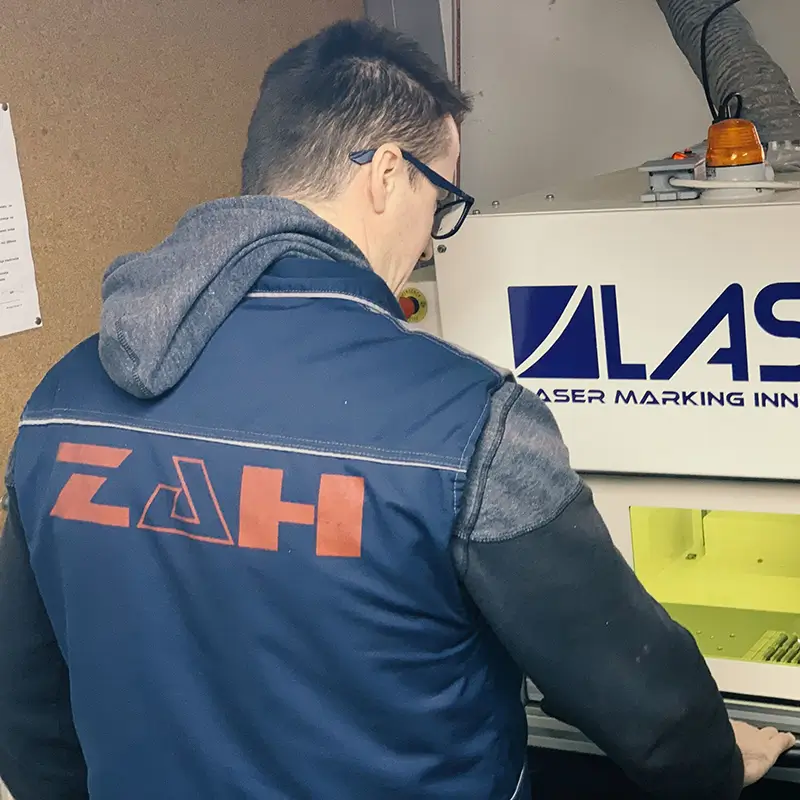
Laser marking is the final technological process of marking metal work surfaces with laser beam. Thanks to the high precision of laser marking, even very sensitive graphics, dotted letters and very small geometry will turn out clearly legible. Laser marking ensures consistent high-quality results.
Laser marking is the fastest and most modern marking process, which enables high productivity and low costs during production.
The process of laser marking of metals has found its application in the marking of products with properties and traceability codes in the electronics and electrical engineering industry, mechanical engineering and tool production, in sheet metal processing, medical technology, promotional materials, jewelry and in the automotive industry.
Powder Coating
Electrostatic plastification (powder coating, metal plastification) is the most modern technological process of surface protection of all types of metals from corrosion.
The method of electrostatic plasticization of metals is a procedure for protecting metals from corrosion by applying powder to the surface of the metal and polymerizing the powder at a certain temperature. This process results in the creation of a plasticized layer that provides excellent corrosion protection, as well as heat and abrasion resistance.
What are the advantages of metal plasticization?
One of the main advantages of metal plasticization is corrosion protection. The polymer layer acts as a barrier between the metal and the environment, preventing contact with moisture, chemicals and other potentially harmful substances. This prevents corrosion of the metal and extends its life.
Also, metal plasticization provides aesthetic advantages. Coatings can be available in a variety of colors, textures and finishes, enhancing the appearance of metal parts or products. This is especially important in the furniture industry, automotive industry and architecture where aesthetics play a key role.
In addition, metal plasticization can improve resistance to wear, moisture, UV rays, and chemical damage. Coatings can be resistant to scratches, abrasion and other external influences, thus increasing the durability and performance of metal components.
It is important to note that the plasticization of metal enables greater flexibility in design. Polymer layers can be adapted to various shapes, sizes and geometries of metals, which opens the door for creative design and innovative solutions.
It is considered ecological and the most environmentally acceptable methods of refining metals.
Cataphoretic varnishing
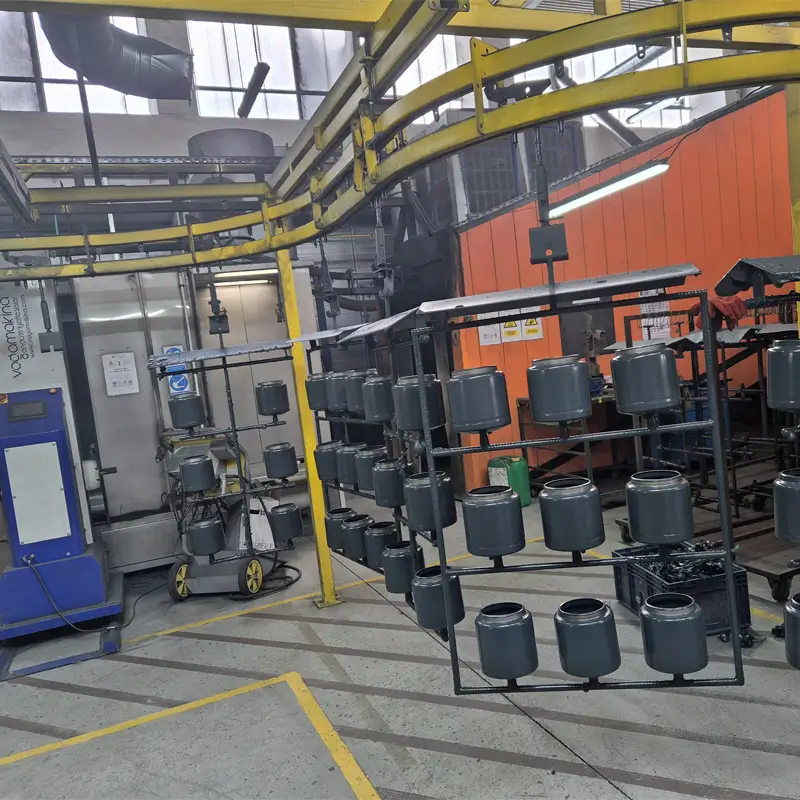
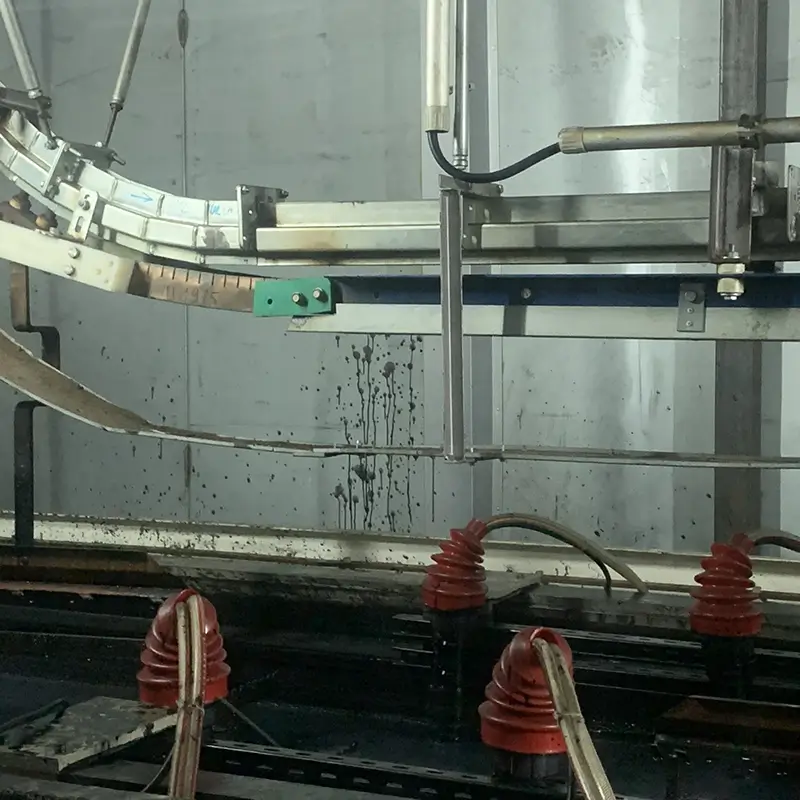
Cataphoretic varnishing (KTL) is the final technological process used for coating metal surfaces with a thin, solid, single layer of organic coating resistant to corrosion.
KTL provides surface protection with a uniform coating and the desired thickness of the protective layer for geometrically complicated objects, both for external surfaces and internal hollow objects.
The process of cataphoretic varnishing consists of immersing an object in a bath with paint that is connected to the negative pole of the generator. In the bath there are immersed electrodes connected to a positive electric charge, where there is a paint composed of pigments, resins, solvents and fillers that dissolve the introductions. Activation of the electrochemical process enables the application of paint on the surface of the metal, which is later stabilized thanks to “baking” in a chamber with a high temperature.
Grinding and Polishing
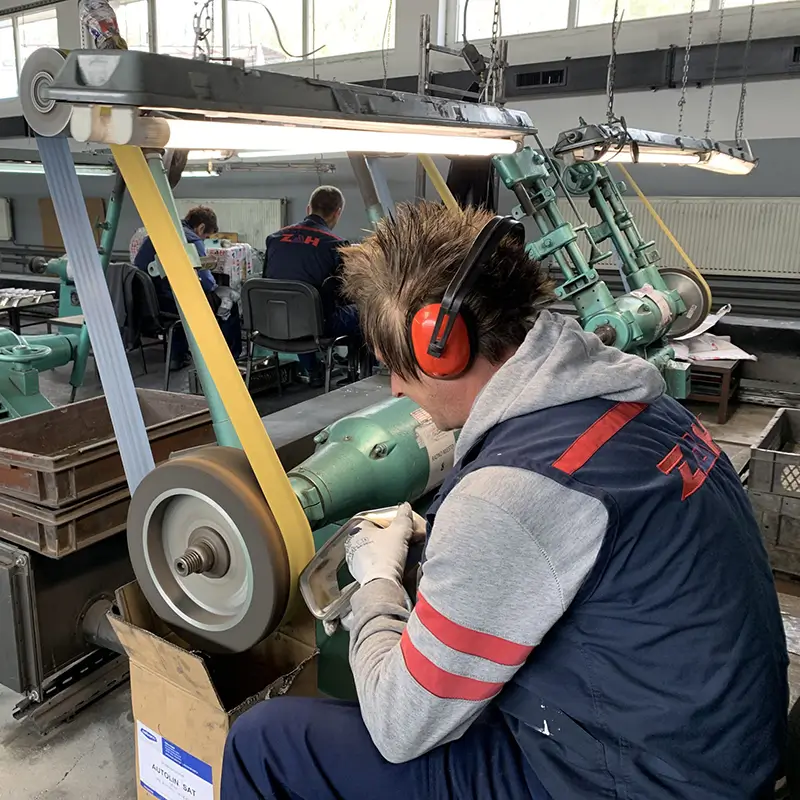
Grinding, in mechanical engineering, is the shaping of materials by separating particles, which achieves smooth surfaces (metals, wood), exact measurements or the required shape (sharpening tools, grinding glass, grinding diamonds and precious stones). Polishing results in a very smooth and shiny surface.
Grinding is performed with a grinding tool or a grinding wheel, which consists of many geometrically undefined blades and spikes made of crystalline abrasive grains, connected by a suitable binder (for example, a silicate binder, a resin binder) into a compact unit.
Polishing is a process of mechanical processing by removing particles, which is used to improve the appearance of the workpiece, to remove oxidation, to create a reflective surface, to reduce friction on pipe walls, in medicine to prevent contamination of instruments. In metallography and metallurgy, polishing is used to create a flat surface without errors (defects) for examining the microstructure of metals under a microscope. Polishing is the finishing of smoothing the workpiece surface using abrasives and a lamellar wheel tool. It is a widely used surface treatment process.
Laser Cutting
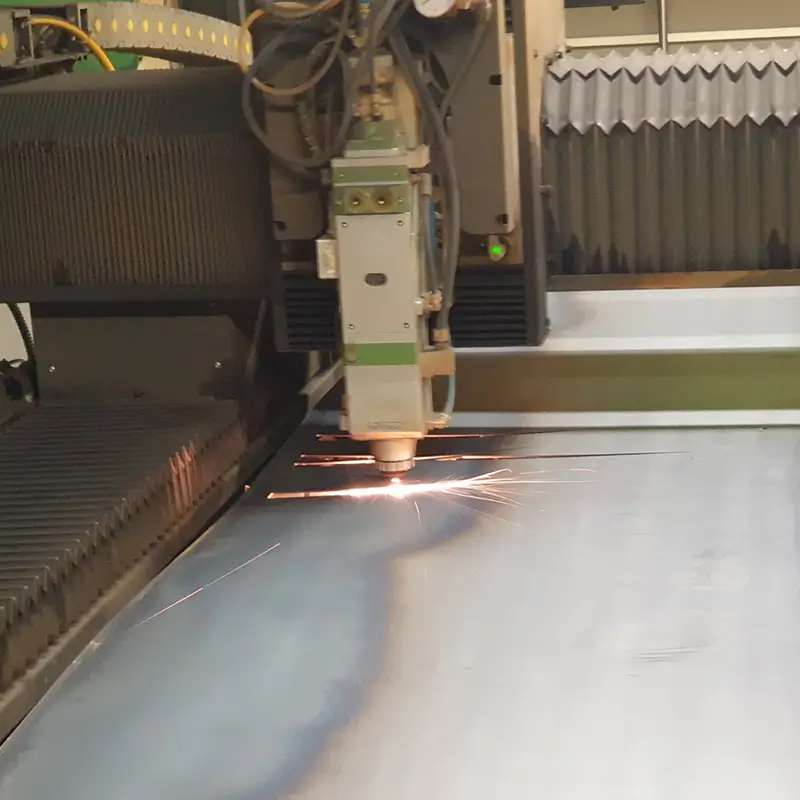
Laser cutting is a technological process of metal processing that uses a high-intensity laser beam for cutting, which performs cutting in combination with inert gases.
A laser beam is a jet of high-power energy that focuses on a small area of metal, and the surface is heated all the way to the melting point.
Fiber lasers enable significantly higher cutting speeds compared to CO2, waterjet or plasma technologies and are the ideal solution for cutting thinner metal boards. Fast and precise positioning enables high-quality cutting of openings and contours in all sizes and shapes.
The protected design of the fiber conductors enables the processing of highly reflective materials such as aluminum, copper, brass, eliminating the risk of damage to the equipment. Fiber lasers are most suitable for laser cutting of metal.
Sandblasting
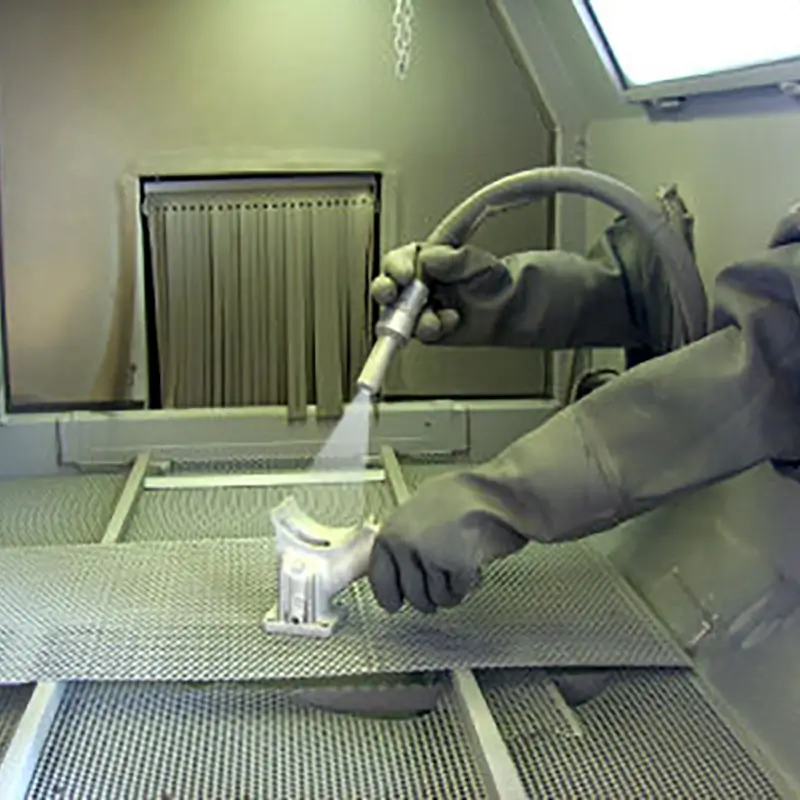
Sandblasting is a technological process of removing various impurities from different surfaces with the help of an abrasive and a device or chamber for sandblasting, in order to obtain a certain quality, roughness or desired purity.
The process is based on compressed air that creates a pneumatic acceleration of the abrasive and is applied to the blasting surface through appropriate nozzles.
Different abrasives, different blasting nozzles and different air pressure levels are used. With all these parameters it is possible to control the blows on the treated surface.

CNC Processing
ZAH is a manufacturer of precision products. In our product range there are different types of soldering tips, screws, nuts, guide pins, screws, sockets, joints and many other products. We can offer a production from very simple to very complex products. As a base material we use copper, brass, aluminum and various types of stainless steel and other steel.
CNC machining is performed at the most modern centers for automatic processing. For machining we use CNC lathes and milling machines of world brands such as Citizen, Deckel MAHO and Doosan. Using the mentioned machines, we can deliver products with a maximum diameter in the range of 4-60 mm.
Respecting European quality standards and using high technology, our qualified staff can offer you a complete construction project. Our products are tailored to your special requirements.
Let your drawing take shape.
Galvanization
Galvanization is an electrochemical process of metal protection by electrolysis (an oxidation/reduction process that occurs at electrodes during the passage of an electric current through an electrolyte). Galvanizing ensures product protection against corrosion and load-bearing capacity. Suitable base materials for the galvanizing process are: steel, stainless steel, brass, copper, aluminium or ABS plastic.
In the galvanizing process, one or more extremely thin layers of only a few µm (1/1000 mm) are deposited on the base material in a so-called galvanic cell. The product to be coated is immersed in a solution of metal salts (electrolytes) and connected to the negative pole (cathode) of a direct current source. The metal to be deposited also enters the conductive bath in the form of anode (positive pole) and as a salt divided into ions. Under instantaneous conductivity, the metal ion to be deposited goes into solution and is activated by the cathode, which forms a part and is deposited there as a metal coating.
Iron plating
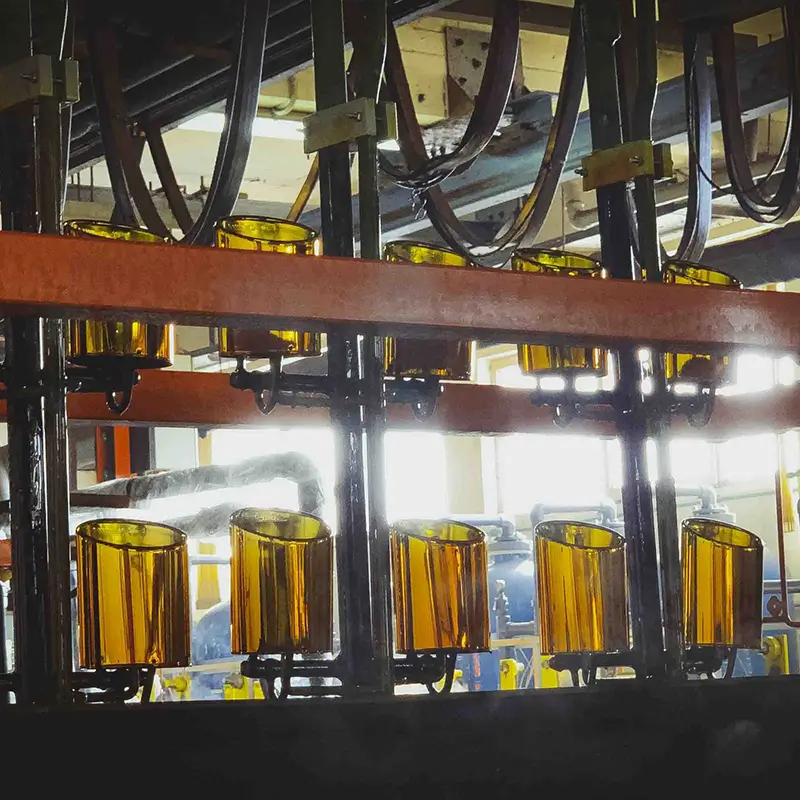
This specialized process uses a heated copper core to which iron (Fe) will be applied in the required layer thickness. The products are ironed on special supports (hangers) in the provided baths for coating.
Application: Soldering tips for industry and households.
Iron plating
This specialized process uses a heated copper core to which iron (Fe) will be applied in the required layer thickness. The products are ironed on special supports (hangers) in the provided baths for coating.
Application: Soldering tips for industry and households.
Nickel plating
Nickel (Ni) is a light silver metal, which is still one of the most important galvanically deposited metals. Nickel coatings have found very different applications in practice. The reason for such a different use was the characteristics of nickel which made it possible to obtain coatings with the characteristics of iron in black, matt, semi-gloss and mirror color. Nickel coatings are used as decoration and as good corrosion protection.
Color: light silver
Versions: gloss, matt, velour, antique
Physical characteristics: relatively high hardness, good elasticity, good chemical resistance (exception: ammonia)
Durability: significant corrosion resistance
Application: optical industry, automotive industry, devices, radio and television technology, weapons technology
Technical application: Nickel is often used in combination with copper-nickel-chromium layers.
Chrome plating
Chrome is a bluish-white metal with very highly reflective properties. First of all, decorative chromium plating is required to apply nickel to the base material. After coating with nickel, chromium is the next layer to be coated and that layer makes the material resistant to corrosion. Chrome protects nickel from loss of shine, minimizes damage and corrosion.
Color: gray, mirror white
Variants: gloss, matt, velour, black
Physical characteristics: non-solderable, heat resistant up to 500 ° C
Durability: very high corrosion resistance, high hardness, wear resistance, weather resistant, stain resistant, extremely chemically resistant
Application: decorative chrome plating (because chrome does not darken, its reflective properties are retained almost unchanged during its lifespan)
Technical application: chromium is often used in combination with copper-nickel-chromium layers.
Tinning
Tin is a silvery-white metal, which is especially interesting because of its solderability.
Color: silver-white
Variants: none
Physical characteristics: low melting point (232 ° C)
Durability: good corrosion protection against moisture, aqueous salt solutions and weak acids
Application: solder-resistant connection parts
Technical applications: soldering.
Zinc plating
Zinc is a metal for standardized achievement of long-term corrosion protection.
Color: bluish white
Versions: blue, yellow, black
Physical characteristics: double protection system in relation to chrome plating
Durability: high corrosion protection
Application: extensive application in corrosion protection, device construction, small parts, screws, nuts, eyelets, furniture products and steel furniture production
Technical application: mechanical pre-treatment is usually not required. Frequent re-chrome plating to improve corrosion protection, stain protection and as an adhesive primer. It affects the look with improved shine and colour determination from colourless to blue, yellow, olive green and black.
Electropolishing
Electropolishing (electrolytic polishing) is an electrochemical process that removes defined material from metal products. The result of electropolishing is an even, polished and shiny surface of the processed product. Electropolishing extends the life cycle of the product.
Vibratory grinding
Vibratory grinding is a type of mass finishing process. It is used to remove the edges of the edges and to illuminate the surface of the product. The vibratory grinding process uses radial vibrations with different granulations of sand and liquid additives (detergents). Sand can be ceramic, plastic or a combination of the two.